Teak Oil vs Silvering: Which Works Best in UK Weather?
As an Amazon Associate we earn from qualifying purchases. Some links on this page are affiliate links, which means we may earn a small commission if you make a purchase.
Your teak set has gone grey. The retailer called it “weathering.” The internet called it “failure.” Your neighbour called it “neglect.” None of that is quite right — grey teak is completely normal, entirely harmless, and for a lot of people, the preferred end result. The panic to restore it to a golden brown is a solution looking for a problem, and in the UK’s damp, changeable climate, it often creates more work than it solves. Here is what actually matters.
Most UK guides assume the golden-brown tone is the goal. They are written for people who want that warm honey colour year-round and assume you have a covered patio or a very patient maintenance schedule. If that is you, the oiling route is worth understanding — but you need to know what you are signing up for before you crack open the first tin.
The advice that pushes restoration as the default isn’t wrong about what teak oil does — it’s wrong about who it’s for. Most of it is written with a drier, more sheltered climate in mind, and applied wholesale to a British garden it quietly sets people up for a maintenance routine they never needed to start.
What Actually Happens to Teak in the UK
Teak turns grey through a natural process. UV light breaks down the surface oils, and rain washes away the tannins that give fresh teak its warm colour. What is left is a dense, silica-rich wood with a silvery-grey surface. This transformation is not damage — it is what teak does. The timeline varies, but expect six months to a year before the patina is fully established, depending on how much sun and rain your set sees. The grey tone is cosmetic only. The wood retains its structural integrity and natural oil content whether it is fresh-cut or has been sitting in a British garden for twenty years. Teak does not dry out, split, or become brittle when it turns grey. Think of it like a bronze statue: the surface changes colour, but nobody calls a weathered bronze broken.
The failure mode owners actually encounter in wet UK winters is not rot — it is surface grime, algae, mould, and damp-trapped discoloration when furniture is covered before it is fully dry. Common causes include over-oiling, using harsh cleaners, pressure washing hard enough to tear fibres, and using non-breathable plastic covers that trap moisture. Cleaning and treating in a mild, dry spell in spring or early autumn, rather than during cold damp weather, makes a significant difference to what you are dealing with by winter.
The Case for Leaving it to Silver (Natural Weathering)
If the silvery-grey tone does not bother you, this is the easiest call you will make about your garden furniture. Once the patina is established, it is done — no seasonal re-oiling, no sticky residue to manage, no peeling film to sand back and redo. The surface change is cosmetic only. Underneath it, the wood retains its structural integrity and natural oil content. You are not neglecting the furniture; you are accepting what teak does best in a climate like ours.
The trade-off is purely aesthetic. You lose the warm honey-brown tone and accept a consistent silvery-grey that looks the same whether it has just rained or been cleaned. Owners who have been through a few UK winters tend to stop oiling anyway — there is only so much reapplication you can do before the first autumn rain tests whether it held. That observation is worth something when you are deciding what to do with a set that sits on an exposed patio.
The real question is not “is this neglect?” but “what am I actually giving up?” You are giving up the warm tone. You are gaining a set that looks consistent through the year and does not need you on a specific dry weekend in May. For most people, that is a straightforward trade.
The Case for Teak Oil (The Cosmetic Choice)
If the warm golden-brown tone is what you bought the set for, oiling is the route to get it back. Teak oil brings out the natural colour and gives the wood a richer, warmer look — the honey-brown tone that comes straight from the workshop. That part of the sales pitch is true. What most tins don’t spell out is how often “every 6–12 months” actually becomes every two or three, once the furniture is taking the full brunt of a British summer’s sun and rain.
A single UK winter is usually enough to expose whether the finish will hold. The moisture cycle — rain, sun, rain — is what breaks the adhesion. When water gets underneath the oil film before it has fully cured, you get peel, blotch, or a sticky surface. Teak oil can also encourage mildew and black marks on naturally oily teak, which is one more reason leaving it to silver sidesteps the whole cycle.
Some products handle damp better than others, but the fundamental issue doesn’t go away. On an exposed patio, that reapplication clock resets constantly through a British autumn — which is the commitment most people quietly stop keeping by year two.
The one situation where oiling is worth the effort: a covered porch or pergola where rain doesn’t land directly on the furniture. There, the 6–12 month cycle on the tin is realistic, and if you genuinely want the warm tone and are willing to keep on top of it, it’s a reasonable trade.
The UK Weather Factor
Most buying advice treats “leave it to silver” as the fallback option — what you do if you can’t be bothered to keep up the golden-brown look properly. That framing has it backwards.
📺 Watch: Restore Outdoor Teak Table - NO SANDING — Quicksand Flooring
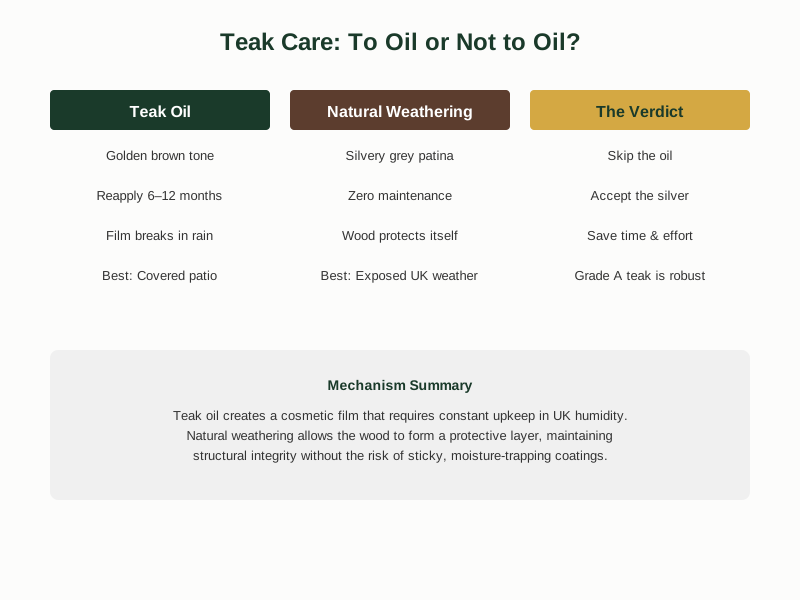
For UK outdoor teak, skip the oil and let it silver by default. The silvery-grey patina is the wood protecting itself — it requires no maintenance, looks consistent year-round, and is what Grade A teak does best in a climate that never gives film finishes an easy run. The one situation where you flip this call is a covered patio, where you genuinely want the warm golden tone and are willing to reapply every season.
The mechanism is this: teak oil forms a film on the surface. That film works fine in dry conditions, but rain and temperature swings let moisture underneath it, breaking the adhesion. Once that happens, you get peel, blotch, or a sticky mess — which is why cheap teak oils often go sticky in UK damp before they have even cured. That’s not a product defect; it’s what film finishes do in this climate. Manufacturers quote reapplication every 6–12 months, and that figure is real — for furniture that’s getting real weather protection. Left fully exposed, most owners are back at it every two or three months, which is the gap the tin doesn’t mention.
| Feature | Teak Oil | Natural Weathering |
|---|---|---|
| Appearance | Golden brown | Silvery grey |
| Maintenance | Every 2–3 months exposed, 6–12 months covered | None once established |
| UK Suitability | Poor (film breaks down) | Excellent (patina protects wood) |
| Best Location | Covered patio | Exposed patio |
| Risk of Sticky Finish | High | None |
| Structural Integrity | Retained | Retained |
| Time Commitment | Full weekend restoration | None |
Now you know what to look for — Get the Free Garden Furniture Care Checklist to audit your set before the season turns.
Product Reality Check: What Teak Oil Actually Does
The market has several teak oils aimed at outdoor furniture owners. None of them dodges the maintenance cycle above — they just differ in how much friction they add to it.
Ronseal Teak Oil (paid link) brings back colour noticeably, and that visible lift in grain and tone is the main reason people reach for it. Budget for a third coat, though: it typically needs more applications and a longer dry than the tin suggests, and some buyers report it going on thicker than older formulations did.
See it on Amazon → (paid link)
Marketed as low-odour and quick-drying, Rustins is actually the slower one to cure in practice — real-world use often means one coat a day, which stretches a full set across a long weekend. That patience pays off in the finish, which is why it’s the one most people reach for on maintenance touch-ups rather than a full restoration.
Batch inconsistency is the recurring complaint on Thompson’s — colour can vary can to can, occasionally coming out orange or rusty rather than the advertised warm brown. Strong fumes and a slow dry add to the list. Testing on an offcut first isn’t optional advice here; it’s damage control.
Cuprinol sits at the value end and applies easily, but skimp on the coats and it can fade and turn sticky faster than the others. Fine for a dry-spell top-up; less convincing for anything you want to hold for a full season.
Liberon is the one oil here with a genuine technical edge — UV filters that actually slow fading — but it only delivers that edge if the surface prep is right. Skip the clean-down beforehand and the difference disappears.
Across all five, the step that actually determines the result isn’t the brand: it’s whether the wood was properly cleaned and fully dried before the first coat went on. Streaky, patchy finishes trace back to that missing step far more often than to the tin itself.
How to Clean Grey Teak (If You Change Your Mind)
If you decide you do want the warm tone after all, the route is a chemical clean followed by a penetrating oil.
📺 Watch: How to Clean Teak Outdoor Furniture Easily ✨ Make It Look New Again — Top To Bottom Cleaning
Oxalic acid is the standard way to strip the grey surface and restore teak back to brown. Mix it according to the product instructions, apply it to the grey areas, let it work, then rinse thoroughly. After that, let the wood dry completely — in British weather, that means a full week, not a couple of sunny afternoons. Apply a penetrating oil (Rustins is a reliable choice here) rather than a film-forming finish. A film finish on a restored surface will just repeat the same cycle.
Never pressure wash teak. The pressure tears fibres and leaves a rough, splintery surface that absorbs unevenly and looks worse than the grey you started with. A soft brush and mild soapy water is all the agitation it needs.
Restoring teak like this is a full weekend commitment, plus a week of dry weather afterwards, and it puts you straight back on the reapplication clock — every two or three months if the set stays exposed, longer if it’s under cover. If that’s not what you want from your spring, silver is fine. It’s what teak looks like after it has done its own weathering in a British garden, and it needs nothing from you.
Frequently Asked Questions
Will my teak furniture rot if I leave it outside in the UK winter?
No. Grade A teak is naturally weatherproof — it does not rot or become brittle when it turns grey. The silvery-grey patina is cosmetic only; the wood underneath stays structurally sound. Leaving it outside through a wet British winter is exactly what teak is designed for.
How often do I really need to oil teak in the UK?
If the set is fully exposed, plan on every two or three months to keep the film intact; under cover, the 6–12 months on the tin is realistic. If you leave it to silver, never. Most people who start with good intentions quietly stop reapplying after a season or two, once the first proper autumn has tested whether the finish held. That’s not a criticism — it’s just what the maintenance burden looks like on an exposed patio.
Can I use household oil (like vegetable oil) on teak?
No. Household oils go rancid, make the wood sticky, and can encourage mould. Dedicated teak oil or leaving it natural are the only two options worth considering. Everything else creates more problems than it solves.
What is the best way to clean teak before oiling?
A soft brush and mild soapy water, done on a dry day so the wood isn’t already saturated when the oil goes on. Skip bleach-based cleaners and pressure washers (see above for why the pressure-washer shortcut backfires), and let the wood dry out fully before the first coat — oiling over damp teak is how you trap moisture under the film from day one.
As an Amazon Associate we earn from qualifying purchases. The products linked above are ones we recommend based on independent research and owner feedback.
Silver Isn’t the Fallback Option
Most guides frame natural weathering as what you settle for when you can’t keep up with oiling. Flip that around and it holds up better: skipping the oil is the low-maintenance choice for a climate that was always going to fight a film finish. Grade A teak is naturally weatherproof, the silvery patina is the wood protecting itself, and the time you save is genuinely yours — no annual ritual, no watching the first autumn rain to see if the coat held. If you do want the warm tone, go in with eyes open: a full weekend to restore, then a real chance of being back on the tin every couple of months once the set is back outside. For most UK patios, silver is the better bet, not the consolation prize. For more on the wood’s structure and the cure chemistry behind that call, timber merchants and wood-finish manufacturers’ own technical guidance cover the same ground in more depth.
Not sure which situation applies to your set? Get the Free Garden Furniture Care Checklist to audit your furniture and decide which path suits it.
Related Guides
For a complete overview, see our Garden Furniture Care by Material: Teak, Rattan, Metal & Plastic (UK).
For other materials, our Teak Care Guide and Garden Furniture Maintenance have the full seasonal rundown.