Is It Worth Repairing Your Garden Furniture? (UK Verdict)
As an Amazon Associate we earn from qualifying purchases. Some links on this page are affiliate links, which means we may earn a small commission if you make a purchase.
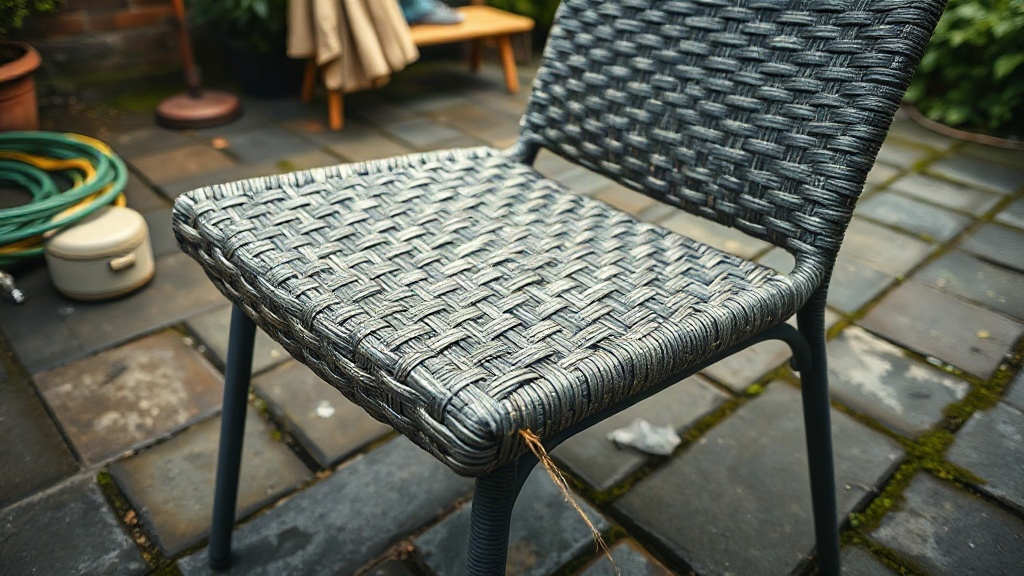
You bought this set in the heatwave summer everyone remembers — stock was flying off garden centre shelves and you grabbed what was left. Two summers on, it’s wobbly, faded to a grey patina, missing a rattan strand, and the cushions have given up. A replacement set is £300. A repair kit is £50. You’re stuck between them, and the hesitation is doing something useful: it’s telling you this isn’t a simple choice.
It isn’t “always repair” or “always replace” either. It’s a short list of disqualifying conditions — is the frame actually sound, is anything structurally rotten, are you still inside your rights as a buyer — and once those are ruled out, what’s left is arithmetic.
This piece covers all of it: the failure patterns behind UK garden furniture wearing out, the call on repair versus replace by material and price, what real owners report about the repair products worth buying, and how to stop the cycle repeating next winter. There’s a free checklist at the end to run against your own set before you spend anything.
Why Garden Furniture Fails in the UK
The British climate is the main culprit. UK winters are wet, damp, and occasionally freezing—a harsh combination for furniture designed to sit outside year-round. The RHS advises storing garden furniture in a dry space over winter, which tells you everything you need to know about leaving it fully exposed.
The failure modes are predictable. Moisture gets into joints and fibres, which is where rot starts—especially on furniture sitting directly on wet ground. Plastic left out over winter becomes brittle; UV and temperature cycling degrade the polymer structure, and a hard frost can finish the job. A common pattern mentioned by owners is a plastic table that cracked after a particularly wet winter—not from storm damage, but from the slow accumulation of moisture cycles.
Well-meaning maintenance can also make things worse. Overusing a pressure washer can damage wood grain and strip coatings from metal. Applying oil to wood before it’s fully dry traps moisture underneath instead of protecting the surface. The RHS specifically notes furniture should be completely dry before any treatment or covering.
For a full breakdown of cleaning and prevention, see our garden furniture cleaning guide.
The Repair vs Replace Verdict
Rule out the disqualifiers first, before you even think about price. Is the frame structurally sound, or has it cracked, snapped, or rotted through? Has rust gone past the surface and eaten into the metal itself? Are you still within your rights as a buyer to reject the item outright (more on that below)? If the answer to any of those is yes, the repair conversation is over before it starts — no repair kit fixes a structural failure, it just delays the moment you buy the replacement anyway.
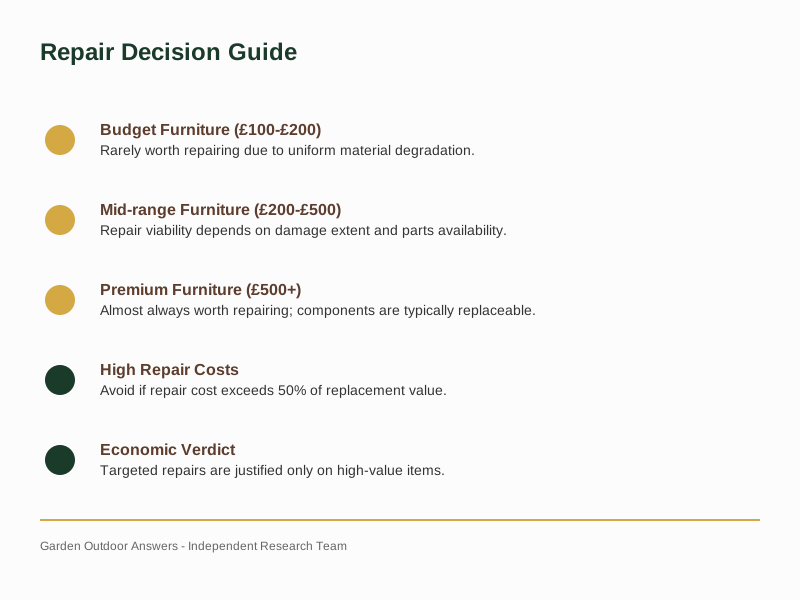
Once the set clears that bar, price becomes the deciding factor, and it’s a genuinely useful one: for furniture that cost under £200 when new, repair is rarely worth it; for furniture that cost over £500, repair is almost always worth it. There’s no official price-tier standard behind those figures — it’s a judgement call built on what the money actually buys. Budget frames in the £100–200 bracket are usually built to a price: the frame, weave and fittings tend to be similar-grade materials bought as a matched set, so a fault in one is often an early sign the rest isn’t far behind. Fixing the visible problem doesn’t buy you much time. Spend £500 or more and you’re normally paying for a properly engineered frame with parts that were designed to be replaceable in the first place — a seat slat, a length of webbing, an individual bolt — so a targeted repair fixes the actual fault instead of masking a set that’s failing everywhere at once.
It’s a common pattern: a repair kit costing a third to half the price of the original set, only for the frame underneath to turn out rusted or rotten once the surface repair is done. When that happens, the repair was never going to save you money — you were just deferring the replacement by a few months.
Not sure whether your furniture clears the bar? Get the Free Garden Furniture Care Checklist to run a quick assessment before spending anything.
The mid-range zone — furniture in the £200–500 bracket — is where judgement matters most, because neither rule applies cleanly. Here the call depends on what’s actually broken and whether parts are available: a loose bolt on a £400 set is a five-minute fix, a cracked frame on the same set is a different conversation entirely.
For a full picture of what quality sets cost new, see our guide to the best garden furniture sets.
Scenarios Where Repair is the Right Call
Some situations genuinely are worth the effort. The common thread is a solid underlying frame with a localised, fixable problem.
📺 Watch: Patio Sofa Restoration / Wicker Sofa / Furniture Rehab — Matthew Schultz
Hardwood furniture—teak, iroko, or similar—is the most forgiving material in the UK climate. It’s durable and can be left out over winter without the same brittleness risk as plastic or the rust risk of untreated metal. If the issue is surface-level—faded colour, light scratches, grey weathering—a teak oil treatment is the right call. Ronseal gets consistent praise for ease of application and visible colour improvement, bringing back the natural wood tone and helping water bead on the surface. The caveat is it needs multiple coats and can take longer to dry than expected, which matters when you’re working around a British summer weather window. Rustins is the alternative owners often reach for when they want lower odour and quicker drying, though the cure time is slow enough that you’re limited to one coat per day in practice.
Rattan or resin-weave furniture is worth repairing if the frame is solid but the weave has a loose strand or a broken slat. Repair kits run from under a tenner for a small patch up to around £20–25 for a fuller weave-and-tool set, and owners who’ve used them on intact frames report solid results. The frame is the real tell. If the metal underneath is rusted through or the frame wobbles independently of the weave, the weave repair is a bodge job—you’re spending money on a symptom while the structural problem remains.
Metal furniture with surface rust is a good candidate for a rust converter rather than replacement. Hammerite Kurust (paid link) is effective on light surface rust, simple to apply with a brush, and leaves a paintable black surface that stops the spread. The catch is it needs proper preparation—wire-brushing and cleaning before application—and it won’t hold up on heavily pitted metal. Holts Rust Converter is simpler to apply and works well on light-to-moderate surface rust, though it has a strong smell and the results depend heavily on prep quality.
For a deeper look at teak oil options and what each product actually delivers, see our teak oil guide.
When Replacement is the Better Choice
There are also situations where repair is throwing good money after bad.
Cheap plastic furniture with a cracked frame is the clearest case. The material itself has become brittle—it’s not just the crack that’s the problem, it’s what the crack tells you about the rest of the structure. Gluing a cracked plastic chair back together is a temporary fix at best, and the underlying plastic will fail again, probably at a different point. The cost of the glue and the time spent almost always exceeds the value of the result.
Structural rust or rot is the other situation where repair kits won’t help. If the metal frame is visibly pitted and weakened, or if wooden components have started rotting from the inside, you’re treating the surface while the structure continues to fail underneath. A rust converter can stop surface rust spreading, but it can’t restore a frame that’s lost its structural integrity.
Consumer rights are also worth knowing about here. You have 30 days from taking ownership of a product to claim a refund if it is faulty—this is established under the Consumer Rights Act 2015. If your furniture arrived damaged or failed within weeks of purchase, the right move is to claim first, not to buy a repair kit.
So: cracked cheap plastic frame → replace. Structural rust or rot → replace. Still within 30 days of a faulty purchase → claim first, don’t repair.
Explore More Topics
Go deeper on specific topics:
- Rattan Weave Repair: Patch, Re-Wrap or Bin It?
- Loose Bolts and Wobbly Chairs: Quick Structural Checks for Garden Furniture
- Glass Patio Table Top: Repair, Replace, Measure Guide UK
- Cast Aluminium and Metal Frame Repair Options (Honest Limits)
For more on your rights as a consumer when buying garden furniture, see our consumer rights garden furniture guide.
Repair Kits: What Owners Actually Report
If your furniture clears the threshold and a repair is the right call, here is what owners actually report using—and where the trade-offs lie.
Teak oil for hardwood is the most common repair scenario. Ronseal is praised for ease of use and visible colour improvement. The gripes that come up repeatedly are coverage—buyers say they need more product than expected—and a few owners note the consistency has changed in recent formulations. Rustins is the lower-odour alternative that owners who use it indoors or in enclosed spaces tend to prefer; the finish is good and it soaks in well, but the trigger sprayer often clogs or dribbles, which is a genuine practical frustration. Thompson’s Teak Oil is easy to apply and gives a natural grain-enhancing finish, but colour inconsistency between cans has been reported enough times that testing on a small area first is worth doing.
Waterproofing fabric is a different problem. Fabsil Universal Protector (paid link) works well after one coat for many buyers—water beads and the fabric stays dry—and it goes on clear with minimal odour once cured. The strong smell during application is the honest downside; you need good ventilation. Scotchgard is easier to use and dries faster, but it’s not a fully waterproofing solution for heavy-duty use—owners who use it on patio cushions and umbrellas report it handles drizzle well but can struggle under sustained heavy rain.
See current price on Amazon → (paid link)
Rust converter for metal is Hammerite Kurust (paid link)’s territory. It is effective on light surface rust, good value, and leaves a paintable black surface. The limitation is that results depend on prep—wire-brushing and cleaning the surface first is not optional. Holts Rust Converter is simpler and many owners say it saves significant time versus sanding every bit of rust off by hand, but it has a strong smell and the results are inconsistent on heavily corroded metal.
The honest summary: for teak restoration, Ronseal is the mainstream pick worth its salt, Rustins is the better choice if odour is a concern. For fabric waterproofing, Fabsil does the job properly. For surface rust, Hammerite Kurust is effective on light rust if you prep properly—don’t reach for it on structural corrosion.
Need the right tools? Check out our guide to the best garden furniture cleaning kits.
The Best Way to Protect Your Investment
Prevention is cheaper than repair, which is why winterisation is worth covering. The RHS advises maintaining, cleaning, and storing garden furniture at the end of summer in dry weather—late August or early September, before the autumn rains arrive. This timing matters: waiting until November means you’re trying to dry furniture in weather that won’t cooperate.
The critical rule—and the one most people skip—is letting furniture dry fully before covering or storing. A cover traps the moisture that’s already in the furniture, which is exactly where mould starts. If you cover a damp chair, you are not protecting it; you are creating the conditions for it to deteriorate faster than if you’d left it uncovered under a patio roof.
The safest pattern is straightforward: clean, dry fully, apply any oil or treatment needed, store cushions somewhere dry indoors, then either store the furniture in a garage or shed, or cover it with a breathable waterproof cover that has vents. If you are using a cover, make sure it is off the ground—sitting a cover directly on a wet patio traps water underneath just as effectively as a non-breathable cover traps condensation.
For a full winterisation checklist, see our garden furniture winter protection guide.
Frequently Asked Questions
Can I use bleach to clean my garden furniture?
Avoid bleach on wood and metal. It strips natural oils from wood, which accelerates drying and cracking, and on metal it can accelerate rust rather than preventing it. Use a cleaner designed for the specific material instead—the short-term saving isn’t worth the long-term damage.
How often should I oil my teak furniture?
If you want the silver-grey weathered patina that teak develops naturally, don’t oil it—that is a legitimate choice and requires zero maintenance. If you want to restore and maintain the brown colour, apply a teak oil once or twice a year, typically in spring before heavy use and again in late summer after cleaning.
What are my consumer rights if my garden furniture is faulty?
The Consumer Rights Act 2015 requires that any products you buy must be of satisfactory quality, fit for purpose, and as described. You have 30 days from taking ownership to claim a refund if a product is faulty—contact the retailer directly, not the manufacturer.
As an Amazon Associate we earn from qualifying purchases. The products linked above are ones we recommend based on independent research and owner feedback.
Clear the Gate, Then Do the Sums
Rule out the disqualifiers first: a frame that’s cracked, snapped, or rotted through, rust that’s gone past the surface, or a set still young enough to fall under your consumer rights as a buyer. Any of those, and the price you paid stops mattering — replace it, or claim it back.
Clear that gate, and price does the rest of the deciding. Under £200, replacement is usually the better call — the economics don’t work in favour of repair, and the underlying materials are likely to throw up another problem soon after. Over £500, a targeted repair is almost always worth it — the frame is built to last, the components are replaceable, and a focused fix extends the life of something worth keeping. In between, look at what’s actually broken and whether parts are available, and use the rough half-value rule as a tie-break: if the repair will cost more than half of what a new equivalent costs, replace it.
Before you buy a repair kit or start browsing for a new set, Get the Free Garden Furniture Care Checklist to assess your furniture’s condition properly and make the call with confidence. The general maintenance advice referenced throughout comes from the RHS’s furniture care guidance; for a dispute with a retailer, Trading Standards is the right first call, not the manufacturer.