Do Garden Furniture Covers Cause Mould? How to Prevent It
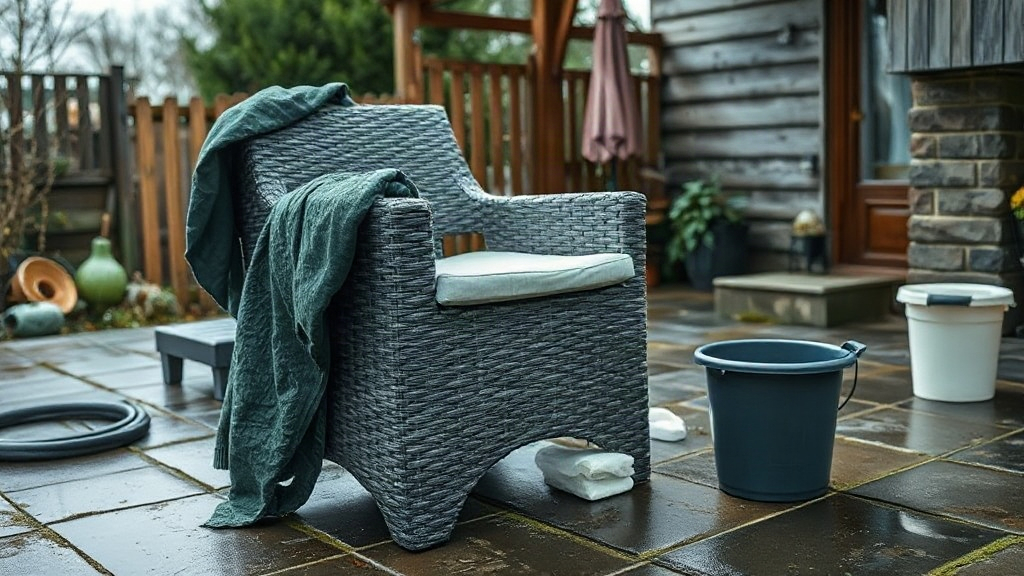
You pull your patio set out for the first warm weekend, peel back the cover, and there it is — black patches across the back of the rattan, grey fuzz on the teak armrests, and a faint musty smell. You covered it. You thought that was the right thing to do. Now you’re looking at a set that cost real money and a problem a simple wipe-down won’t fix. The frustrating part is that the cover was the right idea; it’s just that the specific cover, or how it was used, created the exact conditions mould loves.
This is fixable, and more importantly, it’s preventable. You don’t need to replace the set or spend a fortune. You need to understand why covers cause mould, and use that to make a better choice next time.
Why a Cover Can Make Things Worse, Not Better
Mould spores need moisture and darkness to grow, and they’re already sitting on more or less every outdoor surface in the UK — harmless until the right conditions trigger germination. A damp, shaded environment is exactly that trigger, and it’s exactly what a standard “waterproof” cover creates.
Under a bog-standard cover, rain stays off the surface, which is good. But the ground beneath stays damp, the trapped air turns humid, and no light gets in. A dark, humid microclimate forms — a miniature greenhouse, often several degrees warmer than the air outside, where any moisture already in the wood or weave has nowhere to go. It just concentrates.
The missing ingredient is UV. Sunlight’s UV component damages the cell structures of mould spores and stops them reproducing — a natural check on mould growth that a sealed cover switches off. Furniture parked in permanent shade loses that check entirely, so mould gets a clear run.
That’s the honest trade-off at the heart of this: a cover blocks rain (good), but it also blocks UV and traps humidity (bad). The fix isn’t to stop covering — it’s to cover in a way that keeps the rain protection without building the greenhouse effect underneath. That comes down to three things: the fabric, the fit, and how often the cover comes off.
“Waterproof” and “breathable” are not the same specification, and waterproof-only is the trap. A genuinely breathable cover — typically a woven or laminated polyester blend with a breathable membrane — lets rain bead and run off the outside while letting moisture from the furniture escape through the fabric rather than condensing underneath. Expect to pay noticeably more for one of these than for a basic tarpaulin-style cover; breathable, vented covers sit well above the cheapest unvented ones on price, and that gap is buying the one property that actually prevents mould.
Fit matters just as much as the fabric. A cover should sit loose, not pulled tight like a second skin — tightening it against the furniture kills the air gap and turns the inside into a sealed humidity chamber. Leave a gap at the base (a few centimetres is enough) so air can move; if there’s no drawstring to loosen, prop the cover clear with something like a paving slab or a length of timber. A support pole run along the middle does the same job and also stops rainwater pooling on top. Side vents or mesh panels help too, though they’re more belt-and-braces than essential if the base is already loose.
None of this works if the cover never comes off. Lift it for a few hours on a dry, breezy day — weekly through winter if you can manage it, once a fortnight at an absolute minimum — and the air refreshes, UV reaches the surface again, and any condensation gets the chance to evaporate. Skip that for months on end and you’ve built the exact greenhouse this section started with.
What doesn’t work, ever, is a plastic sheet or bin bag. It seals moisture in with no way out, so condensation forms on the inside and drips straight back onto the furniture — often leaving it damper than if you’d left it uncovered entirely. If you need something for a surprise afternoon of rain, a loose cotton sheet breathes far better than plastic ever will.
| Feature | Benefit | Risk if missing |
|---|---|---|
| Breathable fabric | Lets moisture escape | Traps humidity and condensation |
| Loose fit | Creates the air gap that ventilates | Turns the cover into a sealed chamber |
| Vents or mesh | Gives humid air a way out | No path for stale air to leave |
| UV exposure (when uncovered) | Keeps mould spores in check | Spores grow unchecked in permanent shade |
| Waterproofing alone | Blocks rain reaching the surface | Can trap moisture in if it’s the only thing the cover does |
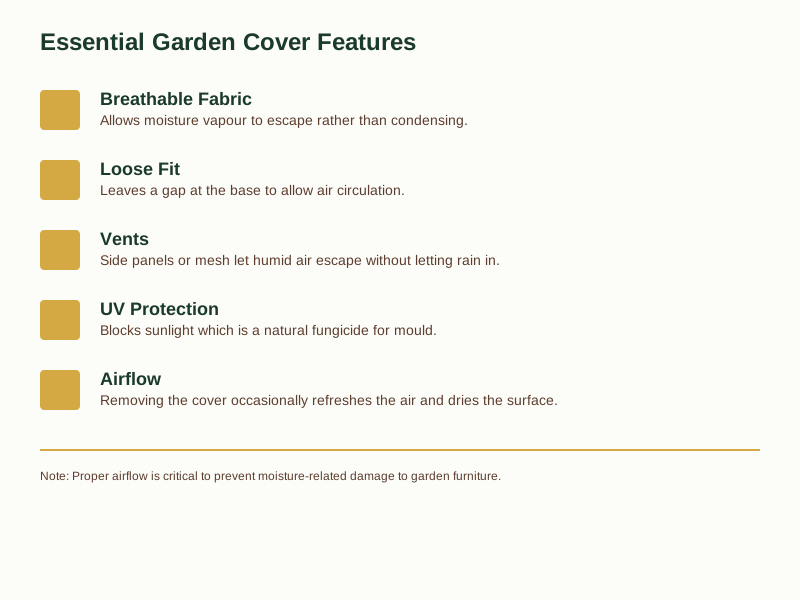
If you want a shortlist of exactly what to check before you buy a cover, grab our free Garden Furniture Care Checklist — it has the key points in order so nothing gets missed. Get the Free Garden Furniture Care Checklist
The UK Winter Routine: Clean, Dry, Cover
For UK readers, the winter routine comes down to three steps, in this order: clean, dry, cover. Skip the drying step and you’ve already lost.
Step 1: clean before the first long wet spell. A clean surface dries faster than a dirty one — grime, bird droppings and leaves all hold moisture against the material. Give the set a brush-down and a wipe with warm water and mild detergent before storing it. On teak, get surface grime off before it works into the grain; on rattan, clear the underside of the seats and back panels where debris collects.
Step 2: dry thoroughly. This is the step most people skip. A UK autumn often serves up rain followed by a mild, still spell, and the frame, weave or wood grain can hold moisture for days after the surface feels dry to the touch. Leave it an extra day or two past the last rain before covering. Properly dry looks cool and pale, not just rain-free.
Step 3: cover correctly. Once the set is dry, fit the breathable cover loosely with a gap at the base. Cushions need separate treatment — bring them indoors to an airing cupboard or spare room rather than leaving them under the cover all winter, because even a breathable cover will trap moisture in cushion filling. If mould does take hold on a cushion, it isn’t just a cushion problem: sit on it, or lean a damp one against the frame, and the spores transfer straight onto the rattan or wood. Pull affected cushions out as soon as you spot it, clean them properly, dry them completely, then bring them indoors rather than putting them back under the cover.
The most common mistake is covering too early in autumn — a set can spend five or six months under a cover with no chance to dry out if humidity builds early. Where you can, hold off until mid-November or later, once the worst of the autumn rain has passed and the furniture has had a real chance to dry.
Wood, Rattan or Metal: The Material Changes the Risk
The right approach shifts depending on what the set is made from, and it’s worth knowing the difference before you buy your next cover.
Teak and other hardwoods are the most moisture-sensitive of the three. Wood is porous — it absorbs water and releases it slowly — so if a teak set goes under cover while the grain is still holding moisture, that moisture gets sealed in and the warm, dark environment speeds mould growth right up. The rule for teak is stricter than for anything else: genuinely dry, not just surface-dry, before it goes under cover.
Rattan and resin weave are a little more forgiving, because the fibres themselves don’t soak up water the way wood does. But the weave construction traps moisture between strands, and in the tight bends — the weak points of any woven set — that moisture can sit undetected for weeks. Harbour Lifestyle’s own rattan care guide makes the same point: never put rattan away damp, and use a breathable, vented cover rather than a sealed one, because even a small amount of trapped moisture can work mould into the weave in a way that’s genuinely difficult to remove afterwards. Harbour Lifestyle rattan care guide
Metal frames — powder-coated steel, aluminium or cast iron — are generally the most forgiving material of the three. Metal doesn’t absorb moisture, so the real risk is rust starting at chips or scratches where the protective coating has broken. A breathable cover still helps here, because any trapped moisture can evaporate through it rather than sitting against the coating. Pulling a cover on tight against a metal frame is its own risk, since it forces residual moisture into contact with the coating at every point of pressure.
The Short Version
Covers are worth using. The damage was never really about the rain — it’s the dark, humid microclimate that a sealed, tight-fitting cover builds underneath. Get three things right — breathable fabric, a loose fit with airflow at the base, and furniture that’s properly dry before it goes under cover — and a cover does its job without creating a mould problem of its own.
A good breathable cover, fitted loosely and lifted off occasionally, gets your set through a UK winter clean. A cheap, sealed one pulled tight over damp furniture does the opposite, and no amount of cleaning in spring undoes that.
Related Guides
For a complete overview, see our How to Winterise Garden Furniture in the UK.
If you want the whole clean-dry-cover sequence and the material-specific checks in one place before you start prepping for winter, our free Garden Furniture Care Checklist has it — a ten-minute read that could save a costly mistake. Get the Free Garden Furniture Care Checklist — it’s the straightforward next step.