How to Clean Teak Garden Furniture (and When Not to Scrub)
As an Amazon Associate we earn from qualifying purchases. Some links on this page are affiliate links, which means we may earn a small commission if you make a purchase.
Most teak care advice gets one thing backwards: it tells you to scrub away the grey. That instruction is the single most common mistake in outdoor teak care, and it’s the reason a lot of sets look tired within a couple of winters instead of lasting anywhere near as long as teak is capable of.
Here’s the mechanism nobody explains properly. Teak’s silver-grey colour comes from a thin surface layer of natural silica and oxidised oils — the same layer that makes the wood water-repellent in the first place. A stiff brush, and especially a pressure washer, strips that layer straight off. What’s left behind is more porous, not less, so it absorbs damp faster, greens over quicker, and needs cleaning more often than before — the opposite of what the scrubbing was meant to achieve. Left alone, the same set asks for almost nothing.
Why Teak Turns Grey (and Why That’s Okay)
Teak is prized precisely because it handles British weather without falling apart. The reason it turns silver-grey rather than rotting through is the natural oil content and silica embedded in the grain; these compounds create a degree of water repellency that most hardwoods simply don’t have.
When teak is exposed to UV and rain, those surface oils oxidise and the wood develops what most people call a “silvering” effect. That grey colour isn’t dirt and it isn’t decay—it’s a patina, a natural protective coating the wood builds for itself.
This happens faster in the UK than in drier climates because our winters are wet and mild, creating perfect conditions for the oxidation process to run all season long. A set bought in a heatwave and left outside through autumn will look noticeably different by spring. That’s not a sign of damage; it’s the expected behaviour of untreated teak. The wood underneath is structurally sound and will stay that way for decades.
This reframes what’s actually going on: you’re not looking at degradation that needs correcting—you’re looking at a material doing exactly what it evolved to do.
The “Don’t” Phase: Why Scrubbing Can Backfire
This is where most guides lead you astray. The standard advice is to scrub teak with a stiff brush, sometimes with soapy water, sometimes with a pressure washer. It’s presented as the obvious solution to a grey, algae-covered set. The problem is what that scrubbing does underneath the surface.
Teak’s natural silica content sits in and just beneath the surface grain. That silica is part of what makes teak naturally water-repellent in the first place. Scrubbing with a stiff brush—or worse, a pressure washer—physically removes this layer. Scrubbing wet wood grain also raises the fibres and wears away the surface as you go, which is exactly the opposite of what you want.
Strip that silica layer and two things happen. First, the wood becomes more porous and absorbs moisture more readily. Second, without that smooth, slightly oily surface, dirt and algae spores have an easier time adhering to the grain. The set you scrubbed, thinking you’d cleaned it, actually ends up dirtier after one wet season than a set you left completely alone.
In a UK context, that’s a bigger deal than it sounds. Our winters are long, damp, and rarely cold enough to kill off algae spores completely. A porous teak surface absorbs moisture that sits in the grain through the winter—the exact conditions that accelerate the surface mould and green staining that prompted the scrub in the first place.
The pressure washer warning deserves specifics, not generalities. Some guides allow pressure washing at low settings—500 to 1200 PSI, with the nozzle held 12 to 18 inches from the surface. But even within that range, the pressure is high enough to force water into open grain and joints, and the impact strips surface material. For anything more than the gentlest pressure wash, you’re doing more harm than good. The RHS position on hardwood garden furniture is straightforward: an annual wash with a brush and soapy water is the only maintenance it needs. Their guidance exists precisely because aggressive cleaning methods consistently create more problems than they solve.
The “Do” Phase: Gentle Cleaning for Surface Dirt
If gentle washing is the answer, what does it actually look like in practice?
📺 Watch: How to restore old teak outdoor furniture — Julia Konya
A soft brush—nylon or medium-bristle—and a bucket of warm soapy water is all routine surface dirt actually needs. Work in the direction of the grain rather than across it; that follows the natural texture of the wood rather than catching and lifting fibres.
The timing matters more than people realise. The practical window in the UK is a dry, mild spring day or a late summer afternoon when the wood is warm and can dry fully afterward. Cleaning teak in cold, damp conditions—mid-winter or in persistent drizzle—leaves moisture sitting in the grain and risks trapping the very problem you’re trying to solve.
After washing, let the furniture dry completely before covering it or putting it into storage. A breathable cover is worth having for summer showers or light overnight protection, but a cover over damp teak does exactly what you don’t want: it traps moisture against the wood, which is where mould starts. If you’re covering for the winter, the furniture must be thoroughly dry first.
This is the annual rhythm that holds up over time: one gentle wash in spring, let it dry, leave it alone through summer, and deal with covers only when the wood is confirmed dry. It’s not glamorous and it won’t produce dramatic before-and-after photos, but it preserves the wood’s own protective properties instead of undermining them.
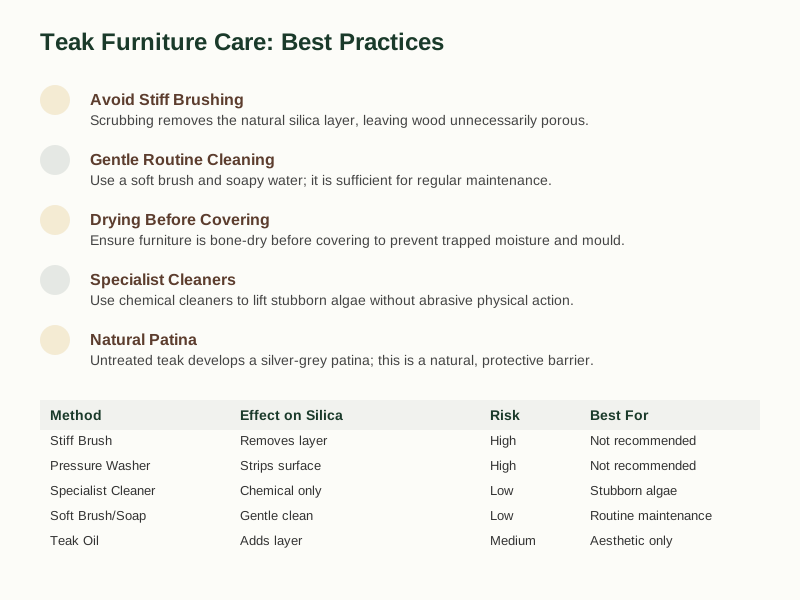
Set the options side by side and the case for gentle-or-nothing makes itself:
| Method | Effect on Silica Layer | Risk Level | Best For |
|---|---|---|---|
| Stiff brush | Strips it off | High | Nothing — avoid |
| Pressure washer | Strips it off | High | Nothing — avoid |
| Soft brush & soap | Leaves it intact | Low | Routine maintenance |
| Specialist cleaner | Chemical action, doesn’t touch it | Low | Stubborn algae or mould |
| Teak oil | Sits on top of it | Medium | Aesthetic preference only |
When to Use a Specialist Teak Cleaner
There’s one situation where gentle washing isn’t enough: stubborn surface growth. If your set has developed a thick green algae layer, dark patches of mould, or patches of lichen in the grain, a specialist teak cleaner is the right call.
These products—Furniture Clinic’s teak cleaner is one of the more widely available examples—are water-based formulas designed specifically to lift mould, mildew, and green staining without abrasive action. They work by chemically breaking down the organic growth rather than scraping it off, which means they don’t strip the silica layer the way scrubbing does.
The honest trade-off is this: specialist cleaners are effective at restoring the golden-brown colour and removing stubborn staining, but they don’t restore the natural oils or add any lasting protection. They undo the weathering effect without replacing what makes teak naturally durable. Think of them as a one-off correction, not an ongoing maintenance product.
The mistake owners make is treating a specialist cleaner like teak oil—applying it annually, expecting it to keep the furniture looking new. It doesn’t work that way. Use it when the set genuinely needs restoring, then step back and let the wood weather naturally again.
To Oil or Not to Oil? The UK Decision
Oiling teak is the most debated question in this whole space, and the honest answer is that it depends almost entirely on what you want the furniture to look like.
📺 Watch: Best Oil for Outdoor Wood Furniture: Tung Oil or Teak Oil? — Woodworking Advisor
The case for oiling is straightforward: it restores the golden-brown colour and enhances the grain. Some owners genuinely prefer that look and find the silver-grey patina aesthetically off-putting. If that describes you, teak oil is a legitimate choice.
The case against is equally straightforward: it’s a maintenance commitment. Once you start oiling, you need to keep doing it. Miss a season and the surface look deteriorates unevenly. More importantly, if the wood isn’t fully dry before you apply oil, you can trap moisture underneath—exactly the opposite of protection. Some teak care specialists argue that teak requires little or no maintenance precisely because of those natural oils, and that regular oiling can actually interfere with the wood’s own weatherproofing.
Among the products owners actually report using: Ronseal Teak Oil (paid link) is widely available, though it has a noticeable smell while wet (it clears quickly) and needs roughly 24 hours between coats, so a full application can eat up most of a weekend. Rustins Teak Oil comes in for particular praise from owners who find it lower in odour—a genuine quality-of-life advantage if you’re treating furniture near the house—and it also dries faster, typically in four to six hours, so a second coat the same day is realistic if the weather holds. Thompson’s Teak Oil can vary noticeably in colour from one tin to the next, so buy enough for the whole job from a single batch and test it on an inconspicuous area first.
Check price on Amazon → (paid link)
The bottom line: if the silver-grey look doesn’t bother you, skip the oil. It’s the lower-effort, lower-risk path and the wood will still outlast most of the furniture in your house. If you want the golden colour, treat it as an aesthetic choice, not a maintenance one—oil sparingly, only on dry wood, and don’t expect it to extend the furniture’s lifespan.
Seasonal Care for UK Winters
Winter is when most teak problems start, and most of them are preventable.
📺 Watch: Garden bench restoration — Sion Hughes
Before the cold sets in—late October or early November in most of the UK—give the furniture a final gentle wash and let it dry fully. This removes surface spores and organic matter before weeks of damp weather give them a chance to establish. Then assess your cover situation. A breathable waterproof cover earns its keep here, keeping autumn leaves and winter debris off the furniture—but only if what’s underneath is dry. Cover a damp set and you’ll come back in February to find mould growing in the exact conditions you thought you were preventing.
If you have storage space—a shed, a garage, a covered carport—bringing the furniture in is the most reliable way to get it through winter untouched. Keep it off the ground and ensure some airflow; even in storage, trapped moisture is the enemy. Check on it once during winter if you can; a quick visual check for damp patches or mould allows you to deal with problems while they’re still small.
For a typical patio set that’s had normal use through summer, leaving it untreated and uncovered through winter is fine. Teak is durable enough to handle a British winter without intervention. The furniture that’s in trouble come spring is almost always the set that was covered while damp or scrubbed with a stiff brush the previous autumn.
That silica layer is the whole story here. Leave it in place and it keeps doing its job for decades on its own; strip it off with a brush or a pressure washer and you’ve swapped a material that maintains itself for one that needs your help every year from then on. Wash gently, save a specialist cleaner for genuine stubborn staining, oil only if you actually want the golden look — and if the silver-grey doesn’t bother you, the lowest-effort option is also the right one.
If you’re working out a full seasonal care routine and want a printable checklist to keep on the potting-shed door, you can grab one here: Get the Free Garden Furniture Care Checklist.
As an Amazon Associate we earn from qualifying purchases. The products linked above are ones we recommend based on independent research and owner feedback.
Frequently Asked Questions
Can I pressure wash teak garden furniture?
Not without risk. Even at low settings, pressure washers force water into open grain and joints, and the impact strips surface material including the natural silica layer. The RHS recommends annual washing with a brush and soapy water for garden seats and tables—which is sufficient and avoids the damage that pressure washing can cause. If you do use a pressure washer, keep the nozzle 12 to 18 inches from the surface and cap the pressure at 1200 PSI, but understand you’re still taking a risk with the wood surface.
How often should I clean teak garden furniture?
For most UK homeowners, once a year is plenty—typically in spring as you’re preparing the garden for the season. Teak’s natural oils and silica provide ongoing protection, and the grey patina that develops is a feature, not a problem. Cleaning more often than this, particularly with aggressive methods, does more harm than good.
Will my teak furniture rot if I leave it untreated outside?
No — this is the most common misconception about teak. The same natural oils and silica that cause the silver-grey silvering also make the wood highly resistant to rot and fungal decay, which is exactly why teak has been used for outdoor and marine furniture for centuries. Left completely untreated and uncovered, teak will weather to grey but stays structurally sound for decades. Rot is only a realistic risk if the wood is kept permanently wet against soil or another damp surface with no airflow, which isn’t how garden furniture is normally used.
Related Guides
For a complete overview, see our Garden Furniture Care by Material: Teak, Rattan, Metal & Plastic (UK).
No. Untreated teak is one of the most naturally durable hardwoods available—it’s not unusual for well-maintained teak furniture to last 50 years or more in UK conditions. What it will do is develop a silver-grey patina over time, which is the natural weathering process working as intended. The structure remains sound; it’s the colour that changes.