How to Clean Outdoor Cushions Without Ruining the Filling
As an Amazon Associate we earn from qualifying purchases. This page contains affiliate links — if you buy through them, we earn a small commission at no extra cost to you.
You’ve brought the rattan set out for the first time this spring, and the cushions smell like a damp wardrobe. Not quite mould, not quite mildew — just that musty undertone that creeps in after a UK winter under a cover that wasn’t doing its job properly. The fabric looks greyish in patches where moss has settled, and there’s a pollen stain across one seat cushion that looked fine in October.
The honest answer is that most outdoor cushions are salvageable. But the reason they go to pot isn’t usually the fabric — it’s what happens underneath. Every guide you’ll find online tells you to strip the covers and wash them. That’s not wrong. But almost none of them tell you what to do with the foam inside, and that’s where the real failure happens.
This is the guide that fills that gap. By the end you’ll know exactly which cleaning path fits your cushions, how to wash them without wrecking the filling, and — critically — how to dry them properly so they don’t smell worse by autumn than they did in spring.
Hand Wash or Spot Clean: Picking the Right Path
Most outdoor cushions have removable covers, and some are labelled as machine-washable. That sounds convenient, but here’s the thing: the cover is only half the problem.
The filling in the vast majority of UK garden cushions is open-cell foam. It is porous, meaning it absorbs water readily and releases it slowly. When you submerge a cushion to wash it, water doesn’t just sit on the surface; it soaks into the foam core and stays there. In a UK summer that’s manageable — a few warm days and you’re sorted. But in autumn or winter, that trapped damp is exactly what mould and mildew need to take hold.
So the cleaning method you choose isn’t just about how clean the fabric gets. It’s about how much water you’re introducing to the foam, and whether you can actually dry it out afterwards.
There are two realistic options:
Hand washing is the safer choice for the foam. You clean the fabric surface without fully submerging the cushion, and you control the rinsing process. It takes longer and it’s a bit of a faff, but the risk of trapping moisture inside the foam is significantly lower.
Spot cleaning works for light maintenance. A vinegar solution can handle pollen, light soiling, and surface odours without you having to soak anything.
Machine washing the covers is fine in one specific situation: when the covers are fully removable and you can be certain the foam is completely dry before you put them back on. If there’s any doubt about drying time, skip the machine.
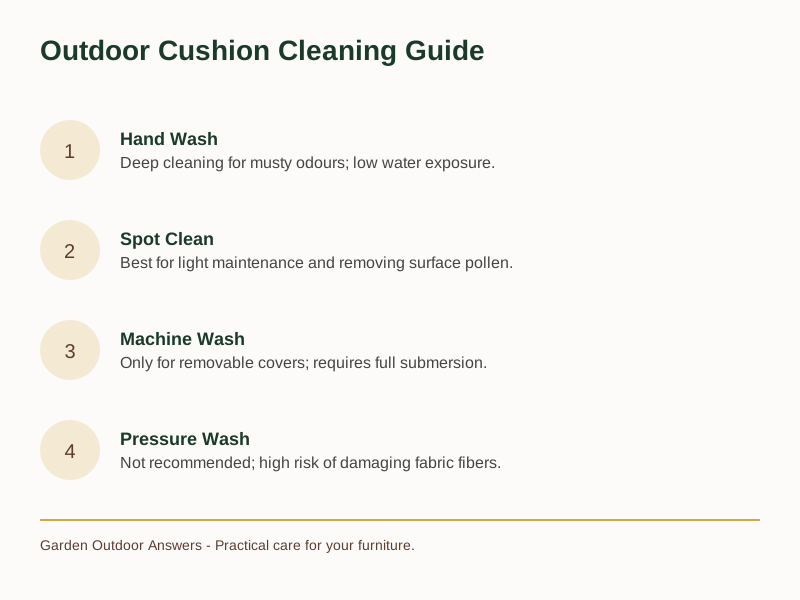
Here’s how the four methods people actually try stack up against each other:
| Method | Best For | Water Exposure | Drying Time | Risk Level |
|---|---|---|---|---|
| Hand Wash | Deep cleaning, musty odours | Low (surface only) | 48-72 hours | Low |
| Spot Clean | Light maintenance, pollen | Minimal | 1-2 hours | Very Low |
| Machine Wash | Removable covers only | High (full submersion) | 48+ hours | High |
| Pressure Wash | Not recommended | Very High | 72+ hours | Very High |
Hand Washing, Step by Step
If your cushions have seen a couple of wet seasons and need a proper refresh, hand washing is the method worth the effort.
What you’ll need:
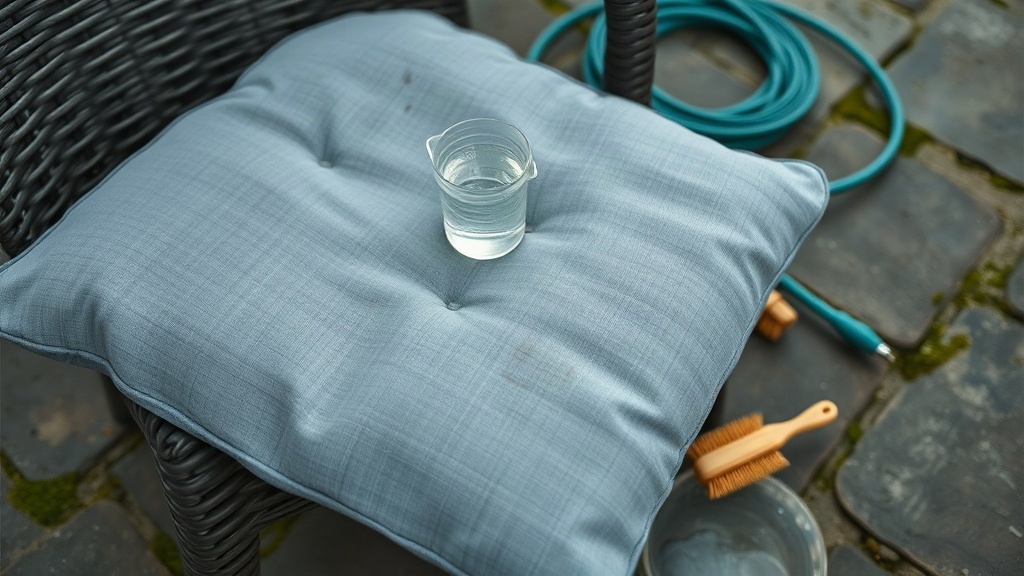
- A bucket of warm water mixed with a mild detergent — washing-up liquid is fine
- A soft brush (a nail brush works well for edges and seams)
- A garden hose for rinsing
- Clean towels or a dry cloth
Start by brushing off any loose dirt, debris, or leaves. Skipping this means grinding particulate into the fabric as you scrub, which can make the stains worse. A quick once-over with a stiff-bristled brush or a vacuum with an upholstery attachment removes the bulk before you introduce any water.
Mix your mild detergent into warm water — not hot, not cold. Dip your soft brush into the solution and work it into the cushion fabric using small circular motions. Focus on the areas that get the most contact: seat centres, armrest pads, and anywhere that touches skin or absorbs the most body moisture. These are the spots that hold the most body oils, sweat residue, and the biological matter that causes that musty smell.
Work in sections rather than trying to do the whole cushion at once. Rinse each section with clean water as you go — a garden hose on a gentle setting is ideal. The goal is to remove the soap before it dries in, because soap residue left in fabric attracts dirt and creates sticky patches that actually make the cushion get dirty faster next time.
Don’t wring the cushion like a tea towel. Squeeze gently to remove excess water, then lay it flat or stand it on its edge to air.
Why the Drying Stage Decides Everything
This is the part that matters more than any other step in the whole process, and it’s the step most guides skip entirely.
Open-cell foam absorbs water like a sponge. Even if the cover feels dry after washing, the foam inside can still be holding moisture deep in its cells. In UK humidity, this moisture takes 48 to 72 hours of good airflow to fully evaporate.
The reason this matters so much is what happens next. Damp foam doesn’t just sit there being damp. Over weeks and months, it slowly degrades. The cell structure breaks down, the foam becomes denser and less springy, and you end up with cushions that feel flat and lifeless even though the fabric looks fine. More immediately, trapped moisture is the perfect environment for mould and mildew to establish — which is exactly the musty smell you’re trying to avoid.
Stand your cushions on their edges while they dry. This exposes the maximum surface area to air and allows moisture to escape from all sides. Rotate them every few hours so no one side stays in contact with the ground.
Never dry cushions in direct sunlight. UV degrades the foam cell structure just as it degrades the fabric; the sun looks like it’s doing a good job because the cover dries quickly on the surface, but the foam underneath can still be damp and is being slowly damaged by UV exposure. A shaded spot with good airflow is what you want.
And this is the critical one: never store cushions under an outdoor cover or in a sealed bag while they’re still damp. The cover traps whatever moisture is left in the foam and guarantees the mould problem will be worse next spring. Clean them, dry them completely, then store them in a dry indoor space or a breathable bag.
If you’re in a hurry, a fan pointing at the cushions speeds the process, but there’s no shortcut that reliably replaces 48 hours of airflow in a British home.
Spot Cleaning Between Deep Cleans
For light maintenance between deep cleans, spot cleaning is the practical option. It’s quick, it uses household ingredients, and it doesn’t require you to haul cushions to a sink.
A mixture of equal parts water and white vinegar works well for refreshing light surface marks, neutralising odours, and dealing with things like bird droppings or fresh pollen before they set. Spray it on, work it in gently with a soft cloth, and let it air dry.
The limitation is real, though. Vinegar won’t shift moss stains, embedded grey discolouration, or anything that’s been sitting for more than a season. It’s the right tool for the weekly refresh, not the annual rescue job.
If you’re spot cleaning regularly — say, giving the cushions a quick spray after each use — you’ll find you need the full hand wash less often. Prevention through little-and-often care genuinely extends the life of the fabric and reduces the amount of heavy cleaning needed each spring.
When Cleaning Won’t Save the Cushion
There comes a point where cleaning isn’t going to help, and it’s worth knowing when you’ve reached it.
If the foam inside the cushion has gone permanently flat — you can feel it compress without any resistance, or there’s a visible dent where someone sits — no amount of cleaning will restore it. The filling is structurally compromised and replacement is the only real solution.
Similarly, if the fabric itself is torn or the stitching has failed, a wash will clean the surface but won’t repair the damage. In both cases, the honest call is to replace the cushion rather than spend time and money trying to revive something that’s past the point of return.
If the fabric is stained but the foam feels firm and springy, a proper hand wash is absolutely worth attempting before you spend money on replacements. Outdoor cushion replacements for a decent rattan or patio set can easily run to £200 or more, so even one successful clean that extends the life of the cushions by a season or two is money well spent.
Once you’ve got the cushions clean and fully dry, applying a waterproof protector spray is the step that most people skip but shouldn’t. Products like Fabsil Universal Protector (paid link) or Nikwax Tent & Gear SolarProof (paid link) create a water-resistant barrier on the fabric surface, which means future rain is more likely to bead off rather than soak in. It won’t make the cushions fully waterproof, but it significantly reduces how much moisture reaches the foam in the first place — and that means less drying time, less mould risk, and a longer life between cleans. Check the product label against your fabric type before you treat a whole set, though — silicone-based sprays don’t suit every synthetic weave, and testing a hidden patch first costs two minutes against a discoloured cushion.
See it on Amazon → (paid link)
Apply it at the end of the season once the cushions are clean and completely dry. That way the protector is on the fabric before the worst of the autumn and winter weather arrives, and you’re setting the cushions up to survive the damp months in better shape than they went into them.
Now you know what to look for — Get the Free Garden Furniture Care Checklist to keep your set in top condition through the season and into next spring.
Frequently Asked Questions
Can I put outdoor cushions in the washing machine?
Only if the covers are fully removable and the manufacturer explicitly states they’re machine-washable. Even then, never put the foam filling itself in the machine — the agitation and water absorption will damage it. If you do machine-wash the covers, make absolutely certain the foam is completely dry before you put the covers back on.
How do I get mould out of outdoor cushions?
A solution of warm water and mild detergent scrubbed thoroughly into the affected areas will handle surface mould on the fabric. For deeper or stubborn mould that has reached into the foam, replacement is usually the more honest answer — mould in the foam core is difficult to fully remove and will typically return.
How often should I clean my outdoor cushions?
A full hand wash once a season — ideally in spring before you start using the set, or in autumn before you store them for winter — is the baseline. Spot clean as needed through the summer months, particularly after periods of rain or if you notice any musty odour developing.
Can I pressure wash outdoor cushions?
No. Pressure washing above a gentle setting can damage the fabric fibres and force water deep into the foam filling, which then takes far longer to dry and significantly increases the risk of mould developing inside the cushion.
What’s the best way to store outdoor cushions over winter?
Clean them thoroughly, let them dry completely — this means 48 to 72 hours of airflow, not just until the surface feels dry — then store them in a dry indoor space. A breathable storage bag is better than a sealed plastic bag, which can trap residual moisture. Never put them away damp and never store them under an outdoor furniture cover through the winter months.
As an Amazon Associate we earn from qualifying purchases. The products linked above are ones we recommend based on independent research and owner feedback.
Same Cushions, Two More Summers
Go back to that rattan set you dragged out this spring. The musty smell was never really the fabric’s fault — covers get grubby, that’s just weather doing its job. It was the water that never fully left the foam the last time someone tried to sort it out in a hurry.
Fix that one habit — hand wash properly, dry it fully over 48 to 72 hours, no cover goes back on until the foam is dry all the way through, not just the surface — and the rest of the routine barely matters. Replacement is always sitting there as the easy option, and sometimes the foam genuinely has given up and it’s the right call. But a cushion with firm, springy foam under a stained cover isn’t a replacement job, it’s a Saturday afternoon job.
Related Guides
For a complete overview, see our How to Clean Garden Furniture Safely (Patio Set Guide).
Grab our Free Garden Furniture Care Checklist to keep on top of the whole set — not just the cushions — through the season.