Can You Weld Cast Aluminium Garden Furniture?
As an Amazon Associate we earn from qualifying purchases. Some links on this page are affiliate links, which means we may earn a small commission if you make a purchase.
A storm has blown through and you’re staring at a crack in the leg of your cast aluminium garden set. It looks fixable. You’ve seen welding kits online that look cheap enough to sort yourself, and a local handyman reckoned he could patch it for not much more. It seems straightforward—heat it up, join it back together, done. Before you spark up the torch, there is one thing you need to know: cast aluminium is not steel. Welding it doesn’t join it back together. It creates a weak point prone to failing under load, sometimes without warning, sometimes catastrophically. This article explains why that is the case, what you can and cannot repair on metal garden furniture, and the honest cost call on whether to fix it or replace it.
Why Cast Aluminium is Different to Other Metals
Cast aluminium is made by pouring molten metal into a mould. That process creates a subtly porous structure—microscopic air pockets trapped throughout the material as it cools. Over time, particularly in damp UK conditions, those pores absorb moisture and any contaminants sitting on the surface. The metal does not just get wet; it holds onto it.
This matters for repairs because contaminated, porous metal does not behave the way clean, solid steel does under heat. The RHS’s general guidance on garden furniture sticks to cleaning and rust-checking rather than anything cast-aluminium-specific—which tells you something in itself: nobody in the official guidance is talking about heat repair. Bennington Metal Furniture’s own maintenance guide for exactly this kind of cast piece backs that up from the manufacturer’s side: wash with a mild soap solution, avoid abrasive cleaners because they scratch the coating and let water in, and touch up any chip or scratch with matching paint before it becomes an entry point for moisture. Nowhere does either source mention a torch.
If your cast aluminium set is structurally sound—no cracks, no bent sections, no signs of metal fatigue—the maintenance job is cleaning, drying, and keeping that coating intact. Crack it, and you’re in different territory entirely.
Why Welding Cast Aluminium Doesn’t Work
The mechanism is worth understanding, because it explains why every part of this goes wrong. When you weld cast aluminium, the heat from the weld creates what engineers call a Heat Affected Zone—the HAZ. This is the band of metal surrounding the actual weld point that has been heated enough to change its microstructure without melting. In most metals, a HAZ is manageable. In cast aluminium, it is the problem.
The weld cools and solidifies, but the HAZ around it is now softer and more brittle than the surrounding cast material. Instead of joining the crack, you have created a stress concentrator—a weak point built into the structure. The frame will crack again. Not necessarily at the weld itself, but right at the edge of the HAZ where the brittle zone meets the original cast. That’s the whole problem in one sentence: the weld itself, not the original casting, is what gives way first—and it does it under load, which is exactly when you don’t want a surprise.
There is another layer to this. Even if you could produce a technically sound weld, MIG welding—the type most home welders have access to—is not suitable for cast aluminium anyway. It requires TIG welding with a spool gun, specialised gas mixtures, and an understanding of the specific alloy you are working with. A budget MIG kit from a hardware store will not do it, and the gap between that kind of kit and the equipment this actually needs is significant before you even get to the question of whether the repair is safe.
Put plainly: cast aluminium is not a material you can repair at home, and it is not a material a professional welder can repair safely either.
The Honest Verdict: Cast Aluminium vs Tube Aluminium vs Painted Steel
This is where the geometry of the decision matters. The question is not “is metal furniture repairable?"—it is “which type of metal furniture and by what method?”
The three most common metal garden furniture constructions are:
- Cast aluminium — the heavy, solid-looking sets with ornate or chunky frames. Made by casting. Structurally compromised if cracked.
- Tube aluminium — lighter sets built from extruded aluminium tubes, typically joined by brackets or welds. The welding process here is fundamentally different and the weld is strong.
- Painted steel — the tubular steel frames you see on bistro sets and some patio furniture. Vulnerable to rust but repairable with surface treatment.
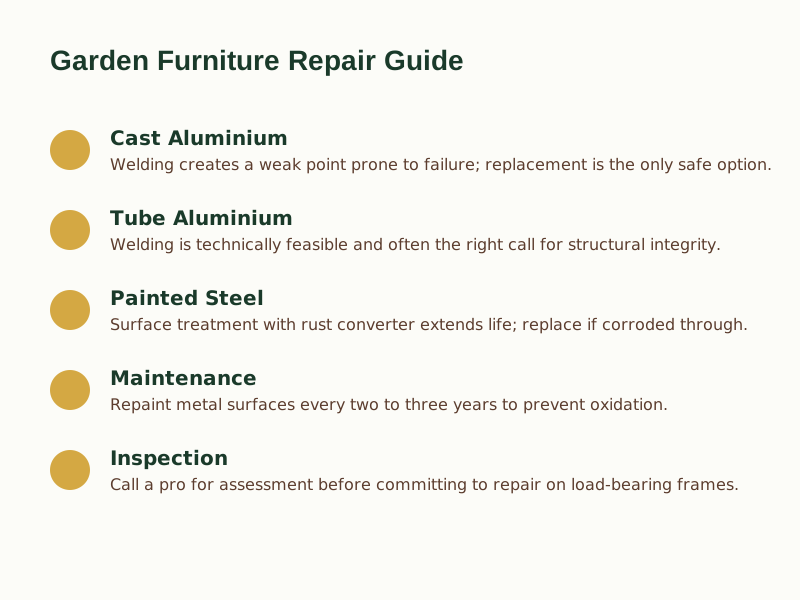
Cast aluminium: replacement is the only safe option. The porous structure, the HAZ problem, the equipment requirement—none of it points toward a repair that lasts. If your set has a cracked cast section, the honest answer is it is not worth repairing. A new leg or a replacement set costs less than a failed repair that collapses under someone mid-summer.
Tube aluminium: welding is feasible and often the right call. The extruded tube is solid, clean aluminium with no porosity issue. A competent TIG or MIG weld on a tube-frame joint can be strong and lasting. If your set is tube aluminium and the weld has failed, that is a repair worth pursuing—but get a proper fabricator, not a general handyman.
Painted steel: repairable at the surface, but with limits. A scratched or rusted steel frame can be treated and repainted to extend its life significantly. But if the frame is bent or has corroded through, you are back to the replacement question.
The cost reality backs this up. Replacement fasteners, touch-up rust paint, and a tin of wax are low-cost consumables. Professional welding for cast aluminium is rarely economical—the labour and materials often cost more than a replacement set from a high-street retailer.
Repairing Painted Steel: What Actually Works
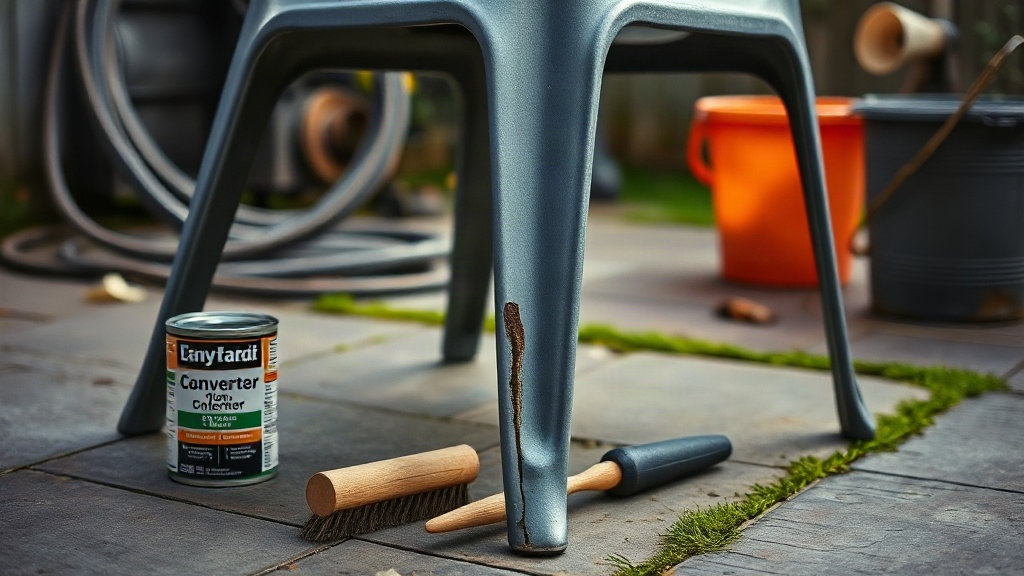
Painted steel garden furniture is more forgiving than cast aluminium, and the repair path is clearer. The failure mode is not usually a crack—it is surface rust starting where the coating has been scratched or chipped.
📺 Watch: How To Refinish Metal Patio Chairs // Step-by-Step Process — Busk It Barn
The fix sequence is straightforward. Wire-brush the rusted area to remove any loose rust and flaking paint. Apply a rust converter—something like Hammerite Kurust (paid link), which turns the remaining rust into a black paint-ready surface in a single coat. Let it cure. Then apply a rust-inhibitive primer and a matching touch-up paint. Done properly, this will hold for another season or two.
Check price on Amazon → (paid link)
The catch is in the preparation. Owners who skip the wire-brushing and apply rust converter directly over loose rust tend to see the rust come back within a year. The converter works on what is there; it cannot re-adhere rust that is already losing its bond to the metal underneath. Treat the surface properly first, and the converter does its job. Rush it, and you are painting over a problem that will push through.
Manufacturer guidance is consistent on the point that actually matters: touch up a chip or scratch the moment it shows bare metal, rather than waiting for a scheduled repaint—it’s the exposed metal, not the paint’s age, that starts the clock. A well-maintained painted steel set kept on top of like that can last a long time in UK conditions. A neglected one will rust through the tube wall, at which point replacement is the only realistic option.
When to Call a Pro (and When to Replace)
Here is the decision checklist that cuts through the noise.
Start with the frame. Run your hand along it. Can you feel any cracks, bending, or areas where the metal gives slightly under pressure? If yes—cracked cast aluminium, bent tube—replacement is the safer, more cost-effective call. Professional repair for cast aluminium is rarely worth the cost, and a failed repair is a safety issue.
If the frame is structurally sound but has loose bolts, wobbly joints, or surface rust, a handyman or a competent DIYer can sort it. Tighten the fasteners, treat the rust, repaint, and keep the set going. That maintenance work is worth doing and costs very little.
Some UK repair services quote by inspection rather than a fixed price, which means you can get an assessment before committing to a cost. For a valuable or sentimental piece you genuinely want to keep, that inspection call is worth making—but only if the frame itself is intact.
The honest bottom line: if the frame is cracked, replace it. If the frame is sound, maintain it. Everything in between is a judgement call on cost versus condition.
Frequently Asked Questions
Can you weld cast aluminium with a MIG welder?
No. MIG welding is not suitable for cast aluminium. It requires TIG welding with a spool gun and specialist gas mixtures. Even with the right equipment, the weld is weaker than the original cast material—so for garden furniture that is sat on regularly, it remains a structural risk.
Is it safe to sit on a welded cast aluminium chair?
No. The weld creates a heat-affected zone that is softer and more brittle than the surrounding cast. Under load—someone sitting down, shifting their weight—that weak point can snap without warning. It is not a risk worth taking.
What’s the best way to repair a rusted metal garden table?
Wire-brush back to clean metal, apply a rust converter to kill any remaining corrosion, prime, then paint. Products like Hammerite Kurust (paid link) give you a paint-ready surface in one coat. For surface rust on steel, this approach extends the life of the set considerably. For cast aluminium with structural damage, replacement is the only safe option.
How often should I repaint metal garden furniture?
There’s no fixed calendar interval that manufacturer guidance actually specifies—what matters is touching up any chip or scratch as soon as it exposes bare metal, before moisture gets a foothold. In an exposed or coastal garden, check more often simply because salt air and rain find those chips faster. The paint is not just cosmetic—it is the thing that keeps moisture away from the bare metal.
As an Amazon Associate we earn from qualifying purchases. The products linked above are ones we recommend based on independent research and owner feedback.
Replace, Repair, or Call a Fabricator
The short version: if your metal garden furniture has a cracked cast aluminium frame, don’t buy the welding kit. The cost of a failed repair—in money, in safety risk, and in the frustration of doing it twice—almost always exceeds the cost of a replacement. Tube aluminium frames can be welded and are worth repairing, by a proper fabricator rather than a general handyman. Painted steel frames are worth maintaining with surface treatment and repainting rather than replacing.
📺 Watch: Finish Repair Of Aluminum Patio Furniture — Enduring Charm LLC
The consistent thread through all of it is catching problems early. A scratch that reaches bare metal in October will be surface rust by March. Treat it when you see it, not when the UK winter has finished with it. And where a frame is genuinely structural and you’re not certain which category it falls into, that’s a case for a qualified fabricator to look at directly rather than general reading—this article, like the RHS’s garden furniture guidance, Bennington Metal Furniture’s own maintenance guide, and Hammerite’s product guidance it draws on, is general information, not an inspection of your specific set.
Related Guides
For a complete overview, see our Garden Furniture Repair: When It’s Worth It UK Guide.
Now you know what to look for and what the honest limits are—grab our free Garden Furniture Care Checklist to keep on top of it season by season.