Tailored vs Generic: Best Cover for Corner Sofa Sets
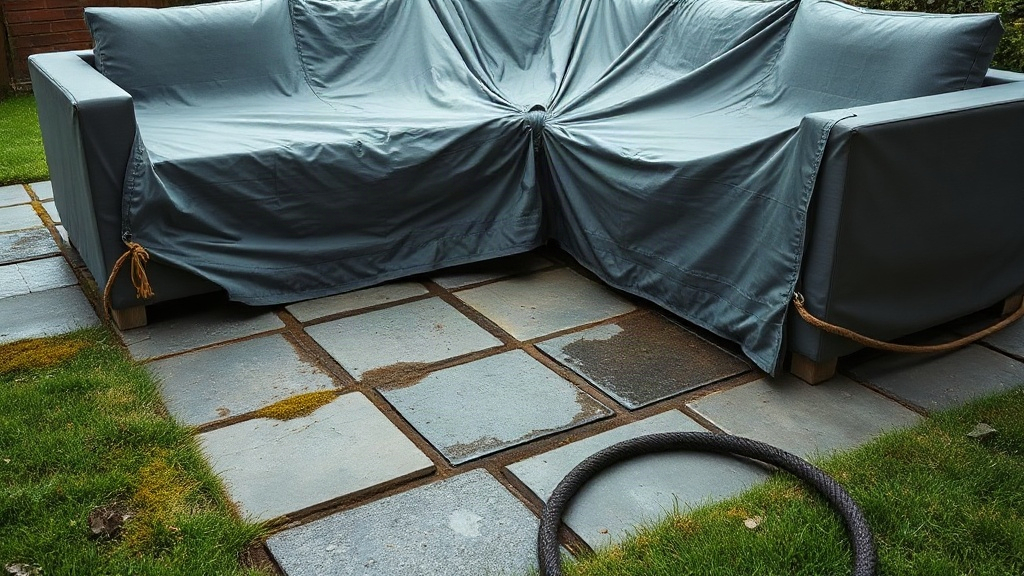
You’ve bought a corner sofa set, used it for a couple of summers, and now the autumn rain has set in. You grab a cover from the back of the garage—something rectangular and cheap—and drape it over the L-shaped set, thinking it’ll do until spring. By March, you find the fabric torn at the corner, the frame underneath spotted with black mould, and the cushions faintly damp despite being “covered.”
That scenario is far more common than it should be. The problem isn’t the quality of the furniture—it’s the geometry. A corner sofa’s L-shape creates forces that a generic rectangular cover simply isn’t built to handle. This article explains exactly why, what happens as a result, and how to pick and fit a cover that’ll actually see your set through a UK winter without drama.
The UK Winter Failure Mode
UK winters aren’t just wet—they’re cyclical. Rain falls, temperatures hover around freezing, then swing mild for a few days, then freeze again. That freeze-thaw pattern is genuinely punishing on garden furniture, particularly the metal frames and cushion fabrics that make up most corner sofa sets. Water finds its way into joints, expands as ice, and tiny cracks widen over seasons. UV rays—yes, even in winter—bleach and degrade synthetic fabric faster than most people realise.
But the hidden killer is condensation. A non-breathable cover traps moisture that the furniture itself releases—residual damp in the frame, condensation from temperature swings overnight. That moisture has nowhere to go, so it sits against the fabric and frame, feeding mould and slowly rotting cushion fillings from the inside out. The set looks fine when you uncover it in spring. Then you sit on it and realise the foam core is compromised.
Owners who skip the cover entirely often come off better in spring than those who used a cheap, non-breathable one. A set left under a patio roof and allowed to dry periodically through winter frequently looks worse for surface grime but better underneath than one that spent four months wrapped in a sealed plastic bag. Heavy-duty waterproof covers keep out the worst weather, but they only work if they’re breathable enough to let condensation escape. That’s the tension that trips most people up—they buy a cover thinking “more waterproof equals more protection,” and end up creating the exact problem they were trying to avoid.
Why Fit Beats Fabric Weight Every Time
Here’s the core issue with corner sofa sets and generic covers. The L-shaped profile creates two things: a long run and a short run, meeting at an internal corner. A rectangular cover—even a large one—has to bridge that geometry. When the wind gets under the loose fabric, it creates stress at the exact point where the cover meets the corner. Within one or two winters, that stress point tears.
A tailored corner sofa cover solves this because it’s cut to follow the L-shape. The fabric distributes wind load across the whole surface rather than concentrating it at one point. Reinforced seams at the corner junction—the structural weak point on a generic cover—are sewn to withstand repeated flexing. Elasticated hems pull the cover down snugly against the furniture, eliminating the gap wind needs to get underneath.
The honest verdict on cost: a properly fitted tailored cover typically runs from around £45 to £120 depending on set size and brand, while a generic “large” cover can be picked up for £15 to £30. The generic option looks cheaper upfront, but it’ll need replacing after one to two winters if it tears—and if it doesn’t tear, it’ll likely have allowed enough water pooling or condensation damage to compromise the furniture underneath anyway. A tailored cover, bought once, is commonly rated for five years or more by the brands that make them. Add up a couple of replacement generic covers plus the risk of furniture damage over that same five-year stretch, and the pricier option usually comes out ahead, not behind.
| Cover Type | Price Range | Lifespan | Notes |
|---|---|---|---|
| Tailored Corner Sofa Cover | £45–120 | 5+ years | Cut for L-shape geometry, reinforced seams |
| Generic Large Cover | £15–30 | 1–2 years | Prone to tearing at corners, poor fit |
| Heavy-Duty Polyester | £60–120 | 3–5 years | Breathable, UV-resistant, ideal for UK |
| PVC/Polyethylene | £40–90 | 2–4 years | Waterproof but traps condensation if not vented |
| Tarpaulin | £15–40 | 1–2 years | Non-breathable, unsuitable for exposed winter use |
For a set that’s left on the patio year-round—which describes most UK gardens without a shed or garage big enough for a corner sofa—the tailored cover earns its price. The only situation where a generic cover is acceptable is if you’re storing the furniture indoors or under a solid shelter through winter, in which case the wind-load problem disappears and you mainly need a dust cover.
If you’re still weighing up whether your rattan or woven furniture needs a cover at all, the short answer is yes—woven sets are particularly vulnerable at the joints where the weave meets the frame, and those are the points water reaches first when the cover fails.
Waterproof or Breathable: Which Wins in a UK Garden
Once you’ve settled on a tailored fit, the second decision is material. Most cover materials fall into two categories, and the choice matters more in the UK than almost anywhere else in Europe.
Polyethylene or PVC-based covers are genuinely waterproof. They shrug off heavy rain and snow without allowing a single drop through. If your set is fully exposed—no patio roof, no shelter from prevailing wind—that’s valuable. But these materials have a significant downside: they trap everything underneath. Without ventilation, the condensation problem gets worse, not better. If you buy a fully waterproof cover, it must have built-in vents, or you need to uncover it on mild dry days to let everything breathe.
Heavy-duty polyester with a breathable coating is the better choice for most UK setups. It repels rain effectively while allowing moisture vapour to escape—the same principle as a technical walking jacket. For a corner sofa sitting under a patio roof or in a sheltered spot, this is the sweet spot. You get rain protection without creating a sealed condensation box underneath.
UV resistance is non-negotiable whichever material you choose. The sun’s ultraviolet radiation degrades synthetic fabric and bleaches cushion material over a single summer. A cover without UV-resistant coating will go brittle and start cracking within a year, which defeats the purpose entirely. Most quality covers state this explicitly—if a product listing doesn’t mention UV resistance, look elsewhere.
Fitting the Cover So It Actually Works
Getting the right cover is step one. Step two is fitting it properly, and this is where a lot of the expected value quietly evaporates.
The first rule: never cover damp furniture. It feels like you’re being proactive—you’ve got ten minutes before the rain comes back, so you whip the cover on quickly. But if the frame or cushions are wet, you’re sealing that moisture in. The result after a wet week is a mould nursery. Let everything dry fully first, even if that means leaving it uncovered on a mild afternoon.
Cushions need special handling. Either remove them and store them indoors, or lay them flat as the manufacturer intended before covering. Cushions standing upright under a cover act like small basins, collecting any water that finds its way through. It’s a common mistake, and one that’s easy to avoid once you know the principle.
Pull the cover down taut. Most tailored covers have drawstrings or straps at the base—use them. A loose cover catches wind like a sail, and the flexing action will either tear the stitching or allow rain to pool in the low spots. If the cover has a vent panel, position it away from the prevailing wind direction so it doesn’t funnel water underneath.
On a mild, dry day in late autumn or early winter, it’s worth lifting the cover completely for an hour or two to let everything air out. This is especially useful after a wet spell. The seasonal rhythm in the UK is roughly: clean and dry the set in late October, cover it through November to February, air it on mild days, then uncover and deep-clean in March. That cycle keeps both the furniture and the cover in better condition than sealing everything up for five months solid.
Grab our Get the Free Garden Furniture Care Checklist to keep these steps to hand when you’re fitting your cover, so nothing gets missed.
Questions Readers Ask About Corner Sofa Covers
Do I need to remove cushions before covering?
Yes, or lay them flat as designed. Cushions trap water against the frame and fabric when left standing upright under a cover, which leads to mould growth and filling degradation from the inside out. Removing them—or storing them indoors through winter—is the better option if your cover doesn’t have a fully waterproof inner layer.
Can I use a tarpaulin instead of a proper cover?
Only if the furniture is being stored in a dry, sheltered location like a garage or shed. Tarpaulins are non-breathable, which means they trap condensation underneath just as effectively as they keep rain out. On an exposed patio through a UK winter, a tarpaulin will leave your set damper than leaving it uncovered.
How tight should the cover be?
Snug enough that there’s no visible slack fabric and no gap for wind to get underneath. Use any straps, drawstrings, or elasticated hems the cover provides. A cover that’s loose in the wind will flex at the stress points—particularly the corner junction on a corner sofa—and tear within one or two winters.
What material is best for UK winters?
A heavy-duty polyester cover with a breathable coating and UV-resistant treatment. Fully waterproof PVC or polyethylene covers work in exposed locations, but only if the cover has built-in vents or you’re willing to uncover it periodically to allow condensation to escape. For most UK garden setups—partially sheltered patios, covered decking—the breathable polyester is the right call.
So, Which Cover Should You Buy?
The core of this article comes down to a trade-off: a tailored, breathable, UV-resistant cover costs more upfront, but it’s the only option that actually protects a corner sofa set through a UK winter without creating new problems. A generic rectangular cover saves money at the point of purchase but fails the geometry test within one to two seasons, and the replacement cost—plus potential furniture damage—makes it a false economy.
If you’re still deciding whether to cover your set at all, consider this: the cheapest option isn’t always leaving it bare. A set left uncovered accumulates dirt, pollen, and tree sap through spring and autumn, requiring a proper clean before you can use it again. A decent cover—properly fitted and breathable—means you skip the spring clean-up marathon and go straight to using the furniture the moment the weather allows.
The right cover isn’t an optional extra. It’s the thing that determines whether you replace your corner sofa set in three years or in fifteen.
Related Guides
For a complete overview, see our How to Winterise Garden Furniture in the UK.
Before you buy, make sure you know exactly what to check for—the fit, the material spec, the vent design. Download our Get the Free Garden Furniture Care Checklist for a plain-language guide to what to verify before you spend. For general upkeep beyond covers, the RHS’s guide to maintaining garden seats and tables and the Cotswold Company’s garden furniture care guide are worth a read.